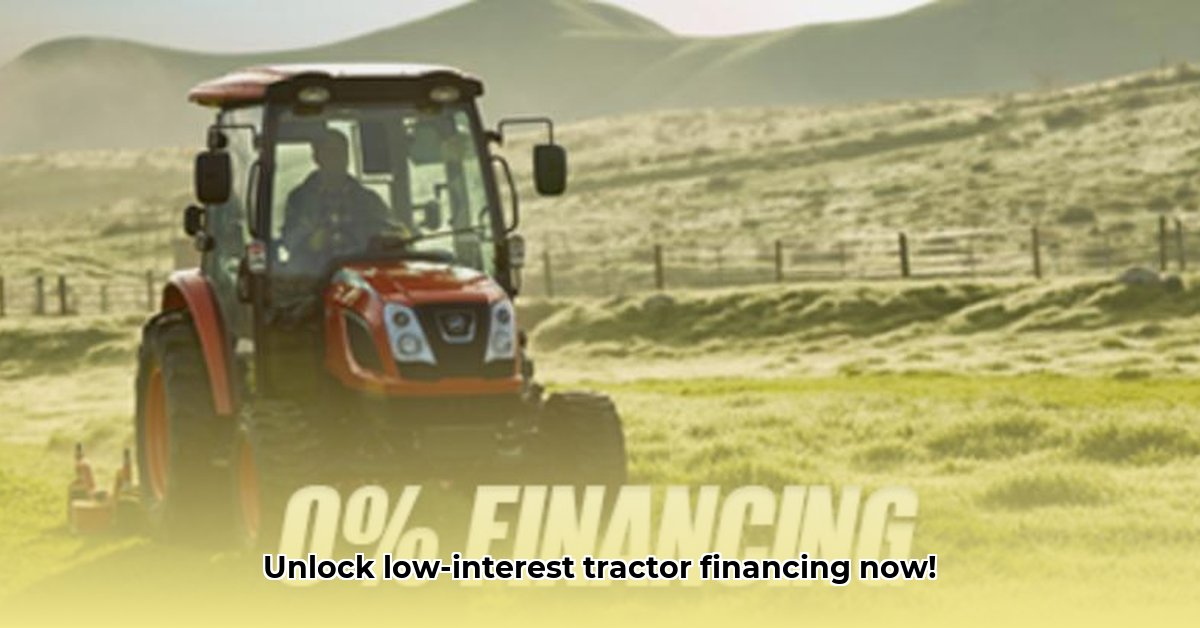
Tractor Loans for Sustainable Agriculture: A Practical Guide
Securing a tractor loan is a pivotal step for any farmer, especially those committed to sustainable agriculture. This guide provides actionable steps to navigate the process effectively, balancing financial prudence with environmental responsibility. Simple loan calculators only scratch the surface; true cost assessment requires a more nuanced approach. We'll delve into loan options, sustainability considerations, risk mitigation, and regulatory compliance to ensure your investment is both profitable and environmentally sound. For more detailed information on loan rates, check out our loan rate information.
Understanding Tractor Loan Options
Several financing avenues exist, each with distinct pros and cons. Choosing the best fit depends on your credit history, financial situation, and long-term goals.
1. Conventional Loans: Offered by banks and credit unions, these require strong credit and a substantial down payment. Pros include potentially competitive interest rates and straightforward processes. Cons include stricter eligibility criteria and potentially higher rates for farmers with less-than-perfect credit.
2. Government-Backed Loans: Programs like those offered by the USDA often provide more accessible financing with potentially lower interest rates and flexible repayment terms. While easier to qualify for, they often involve more paperwork and stringent regulations.
3. Leasing vs. Buying: Leasing offers lower upfront costs and allows for equipment upgrades, but you won't own the tractor at the lease's end. Buying requires a larger initial investment but offers long-term ownership and potential resale value. The best option depends on your budget and anticipated tractor lifespan. Do you anticipate needing to upgrade frequently? Or are you in it for the long haul?
Calculating the True Cost: Beyond Simple Calculations
Online loan calculators provide a starting point but fall short of capturing the complete financial picture. Accurately determining your Total Cost of Ownership (TCO) requires a detailed analysis.
1. Fuel Efficiency: Fuel costs significantly impact operational expenses. Consider the long-term savings associated with fuel-efficient models. Alternative fuels like biodiesel, while potentially requiring higher upfront investment, offer significant long-term savings and environmental benefits. How much could you save annually with a 10% more fuel-efficient tractor?
2. Maintenance and Repairs: Allocate funds for regular maintenance (oil changes, filter replacements) and potential repairs. Unexpected breakdowns can be costly; an extended warranty and preventive maintenance are worthwhile investments. Do you have a contingency plan to cover unexpected repairs?
3. Tractor Lifespan: A tractor's longevity affects annual expenses. Higher-quality, durable tractors may cost more upfront but reduce repair costs over time. Research the longevity and reliability of different brands and models before committing. How will you factor this into the calculation?
4. Total Cost of Ownership (TCO): This encompasses purchase price (or lease payments), fuel, maintenance, and potential resale value. A comprehensive TCO analysis clarifies the true cost of your investment. Have you considered all these factors when weighing options?
Sustainability: Choosing an Environmentally Conscious Tractor
Sustainable agriculture demands environmentally friendly practices and equipment choices.
1. Fuel Efficiency: Prioritize tractors that minimize fuel consumption and emissions. Innovative technologies offer significant efficiency improvements.
2. Reduced Emissions: Choose tractors with low greenhouse gas emissions, contributing to environmental responsibility and potentially enhancing your farm's brand image.
3. Water Efficiency: Some tractors use water-saving tillage methods, crucial in water-stressed regions.
4. Reduced Pesticide Use: Precision agriculture technologies allow for targeted pesticide application, minimizing waste and environmental impact. How will your tractor choice impact your farm's overall sustainability goals?
Securing Funding: A Step-by-Step Approach
Assess Your Credit: Check your credit score and address any shortcomings before applying for a loan. A higher score improves your chances of approval and may secure better interest rates.
Research Loan Options: Compare offers from various lenders, including banks, credit unions, and government agencies. Negotiate terms for the most favorable deal.
Explore Government Programs: Investigate government grants and subsidies designed to support sustainable agricultural practices. These programs significantly reduce borrowing costs.
Prepare Your Application: Gather necessary financial documents—income statements, tax returns, credit history—for a smooth and efficient application process.
Negotiate Terms: Don't hesitate to negotiate interest rates and repayment terms. Use competing offers to your advantage. What strategies will you use to best leverage your options?
Risk Management: Planning for Contingencies
Farming involves inherent risks. Develop a robust risk management strategy.
| Risk Factor | Likelihood | Impact | Mitigation Strategies |
|---|---|---|---|
| High Initial Investment | High | High | Secure financing; explore government subsidies; consider leasing; budget carefully. |
| Fuel Price Volatility | Medium | Medium | Lock in fuel prices; explore alternative fuels; improve fuel efficiency. |
| Variable Crop Yields | Medium | High | Diversify crops; implement crop insurance; practice effective risk management techniques. |
| Equipment Malfunction | Medium | Medium | Regular maintenance; extended warranties; establish an equipment repair fund; prioritize reliable equipment. |
| Climate Change Impacts | High | High | Implement climate-resilient farming practices; select drought-resistant crops. |
Regulatory Compliance: Staying Informed
Stay current on regulations concerning emissions, pesticide use, and water management. These laws impact operational costs and investment decisions. Consult your local and state agricultural agencies for updated information.
Conclusion
Securing a tractor loan for sustainable farming requires careful planning and a comprehensive understanding of available options. By meticulously assessing the TCO, prioritizing sustainability, and implementing a robust risk management strategy, you'll pave the way for a profitable and environmentally responsible agricultural future. Remember, your investment in sustainable equipment is an investment in the long-term health of your farm and the planet.